
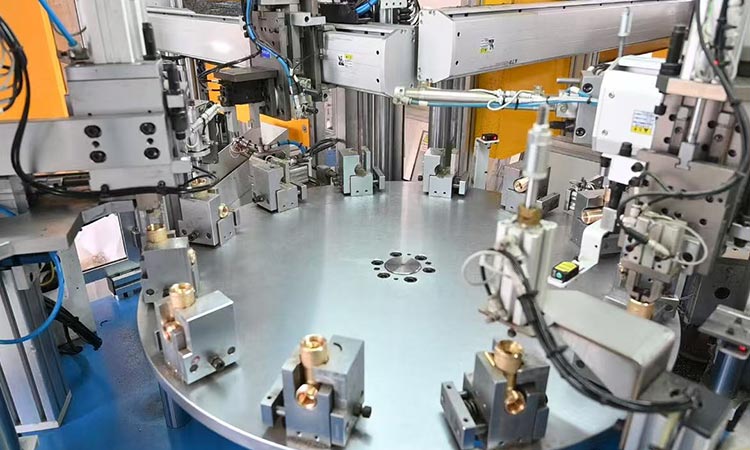
In modern industrial manufacturing, gas cylinder valves are often overlooked, yet their importance is no less than that of key mechanical components. From steelmaking and welding to electronics, food processing, and petrochemical industries, cylinder valves are the core elements that ensure the safe and stable delivery of industrial gases.
1. Cylinder Valves Are Control Units, Not Accessories
Many manufacturers mistakenly regard valves as “attachments,” while in reality they perform critical functions: pressure control, gas flow regulation, sealing protection, and emergency shut-off.
Without valves, a gas cylinder is merely a storage container; with valves, gas can be used precisely and safely.
Flow regulation affects productivity
Automated systems require a stable gas supply; valves allow precise control to maintain consistent product quality.
Sealing affects operating costs
Even minor leaks can result in wasted gas, increased cost, and potential safety risks.
Emergency shut-off determines risk level
When incidents occur, valves allow immediate cut-off to prevent escalation.
2. Different Industrial Gases Require Different Valves
Cylinder valves are not universal components. Requirements vary depending on gas type and application.
| Gas | Application | Key Requirements |
| Oxygen | Welding, cutting, medical | Oil-free, explosion-resistant, high cleanliness |
| Nitrogen | Protective atmosphere | High sealing performance |
| CO₂ | Beverage, welding | Corrosion resistance |
| LPG | Heating, burning | Strong pressure resistance, safe relief |
| Chlorine | Chemical industry | Corrosion resistance, structural safety |
Choosing the wrong valve reduces efficiency and increases safety risks.
3. Faulty Valves Are Never “Minor Issues”
Treating valves as “low-cost consumables” leads to “high-cost consequences.”
A faulty valve can result in:
Leakage → Explosion or suffocation risk
Unstable gas flow → Product defects and scrap
Contamination → Process failure
Shutdowns → Costly production delays
A common misconception is:
“If it fails, we’ll just replace it.”
In reality:
Downtime costs are often hundreds of times greater than the valve price
Liability is far more expensive than procurement
From a management viewpoint, cylinder valves are risk control points, not purchasing parts.
4. Valves Are the “Interface Security Strategy” of the Factory
Just as interface security matters in cybersecurity, valves are the interface between:
Cylinder and equipment
High pressure and working pressure
Chemicals and personnel
Simply put:
The more reliable the valve, the more stable the production environment.
5. Future Trends: Safety, Durability, and Smart Control
Traditionally, valves were purely mechanical. The future is moving toward intelligent safety components:
High-resistance composite materials
Long-life sealing structures
Ultra-low leakage levels
Sensor-integrated valves (pressure/temperature monitoring)
Remote valve status monitoring
This means reduced risk and improved digital management.
Conclusion
Cylinder valves are not insignificant spare parts; they are the “safety valves” and “efficiency valves” of industrial gas systems. Wherever industrial gases are used, cylinder valves remain critical to quality and safety.
A mature factory never overlooks the reliability of such small components.