
For gas valves—industrial products where safety and consistency are non‑negotiable—”process” is never a slogan. It is a complete system that must be repeatable, verifiable, and traceable. At Chunhe, valve manufacturing starts from raw material selection and is built around three core principles: material stability, process reliability, and closed‑loop inspection.
1. Starting at the Source: Brass Bars and Hot Forging
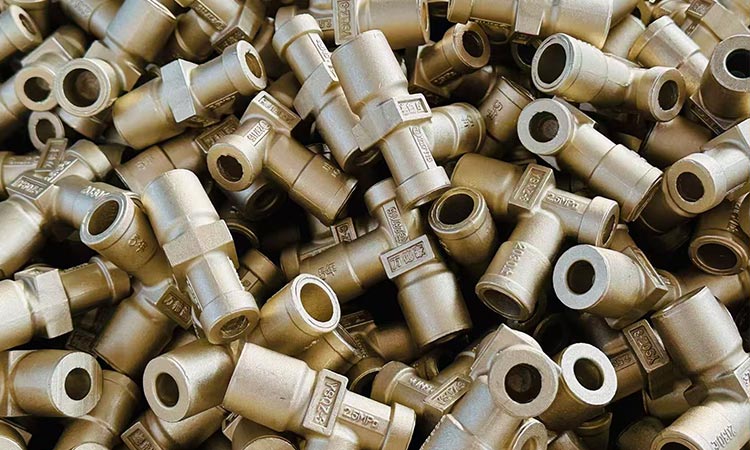
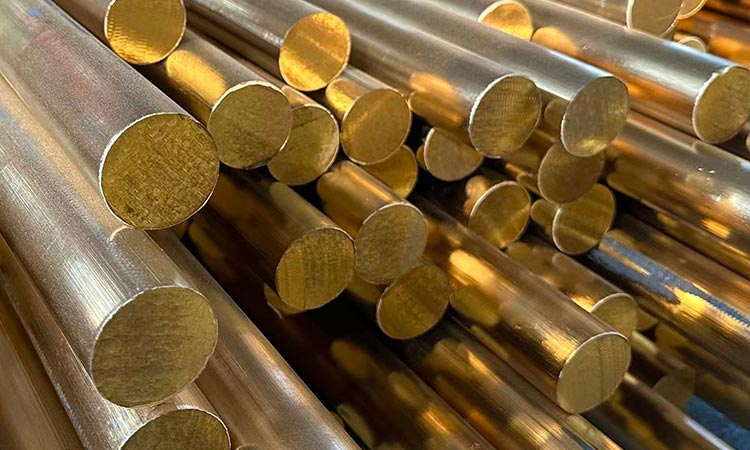
Every valve body begins with brass bars that comply with the HPB59‑1 standard. At this stage, speed is not the priority; consistency is. Stable raw materials reduce uncertainty throughout all subsequent processes.
The brass bars are first cut to fixed lengths using automatic cutting machines, ensuring uniform dimensions for each blank. The cut pieces then enter the hot forging process, where high temperature and dedicated dies form the initial valve body and component blanks.
Hot forging is not simply about shaping. By controlling plastic flow, it increases material density and lays a solid foundation for pressure resistance and sealing performance in later use.
After forging, the blanks undergo deburring and trimming, followed by shot blasting to remove oxide layers and surface residues. This stabilizes surface conditions and improves positioning accuracy during subsequent machining operations.
2. Machining: Precision Comes from Process, Not Experience
Once forging and surface treatment are completed, the valve body blanks are transferred to the machining workshop. Here, consistency does not rely on individual craftsmanship but on dedicated equipment and fixed process parameters.
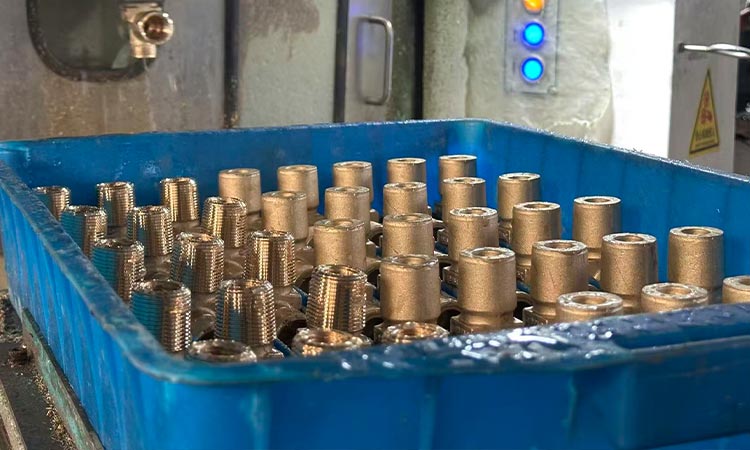
Valve bodies are machined on specialized valve machines to complete internal passages, cavities, and threads in a single setup, minimizing errors caused by repeated clamping. Components are processed on fully automatic feeding lathes, ensuring dimensional and surface consistency across batches.
High‑pressure valves require additional stress‑relief heat treatment in an industrial tempering furnace. This stabilizes the material structure after machining and ensures long‑term reliability under high pressure and continuous service conditions.
Before assembly, all valve bodies and components undergo ultrasonic cleaning to remove fine metal particles and residual oils. Though often underestimated, this step has a direct impact on sealing performance and the service life of elastomer components.
3. Assembly Logic: Automation and Manual Work in Parallel
At Chunhe, assembly methods are selected based on product characteristics—not ideology.
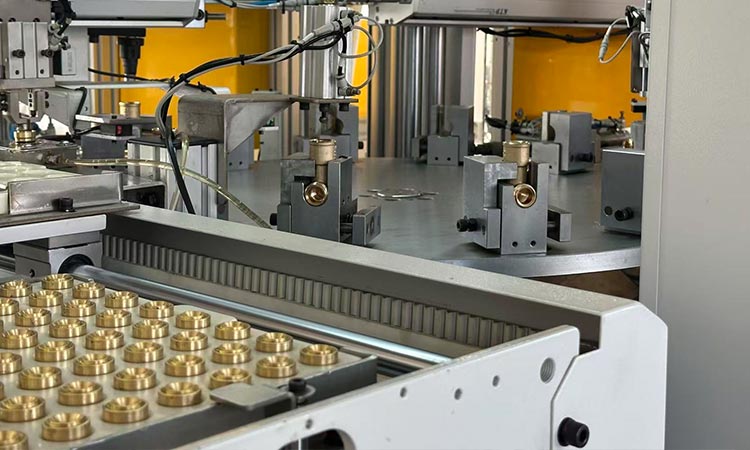
Liquefied petroleum gas (LPG) valves are assembled on fully automatic production lines that integrate automatic assembly, in‑line leak testing, and automatic rejection of non‑conforming products. This significantly reduces human influence on critical performance factors.
Rubber sealing components are pre‑assembled on independent automatic lines before being fed into the main assembly line, ensuring consistent installation depth and avoiding variability from manual assembly.
Industrial gas valves, due to their wider model range and structural diversity, are assembled manually. However, standardized fixtures and inspection procedures are used to control consistency throughout the process.
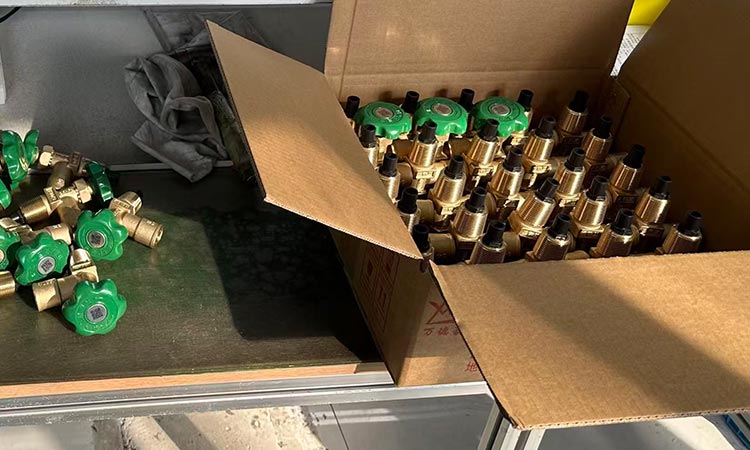
After assembly, each valve undergoes individual leak testing. Qualified products are laser marked for batch traceability and then proceed to final packaging.
4. Inspection Is Not Sampling—It Is a System
At Chunhe, inspection is not a formality. For every production batch, samples are taken to the testing center for systematic evaluation.
- Testing covers materials, structure, and service conditions, including:
- Spectrometer: verification of raw material composition against HPB59‑1 brass requirements
- Tensile testing machine: measurement of tensile strength of brass bar materials
- Vibration testing: evaluation of reliability under vibrational environments
- Burn resistance testing: for oxygen and flammable gas valves, assessing material fire resistance
- Salt spray testing: corrosion resistance evaluation
- Impact testing: assessment of structural safety margins under sudden loads
- Fusible alloy testing: verification of safety devices in flammable gas valves
- Vacuum testing: confirmation of sealing performance
These tests are not conducted for presentation purposes. Their primary role is to validate process parameters and drive continuous improvement through feedback.
5. Conclusion: The Essence of Process Is Repeatability
Chunhe’s manufacturing system does not depend on individual experience. Instead, it is built on stable processes, dedicated equipment, and systematic inspection. For gas valves, true competitiveness lies not in impressive specifications, but in one simple fact: every valve performs exactly as expected, wherever it is used.
At this level, manufacturing excellence is no longer about slogans—it is about long‑term discipline.