
In the world of industrial gas control, an LPG cylinder valve is more than a mechanical fitting—it is a safety device that manages the flow of a highly flammable medium. At Chunhe, every valve is designed and manufactured with one goal: long-term safety and dependable performance under real working conditions.
Below is how we achieve that level of reliability.
1. Choosing the Right Materials Is the First Line of Safety
A safe LPG valve starts with the right metal.
Chunhe uses high-strength brass alloys selected for their:
Pressure-bearing capability
Resistance to LPG and mixed gases
Stable long-term mechanical properties
Clean internal machinability
We avoid recycled or unstable copper alloys that may crack, deform, or leak.
Every incoming batch is tested for chemical composition and strength before production begins.
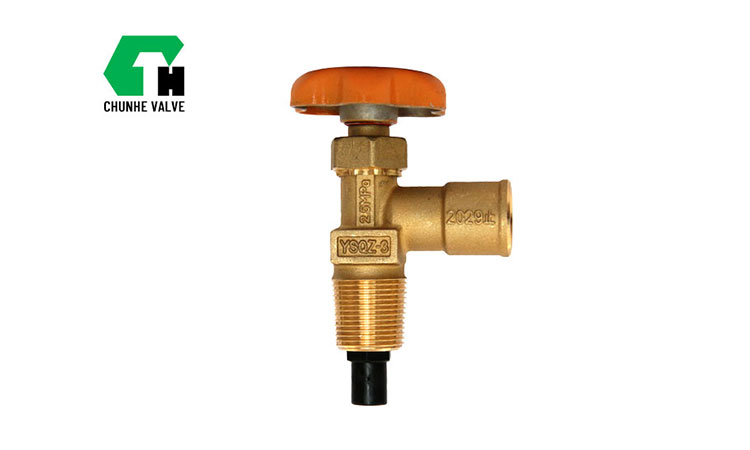
2. Structural Design Focused on Real-World Conditions
Our LPG valve design philosophy revolves around one principle: the valve must hold up under constant pressure cycles, temperature changes, and frequent operation.
• Robust valve body construction
Engineered to maintain strength in long-term service and resist stress concentration.
• Durable spindle and bonnet design
Ensures smooth operation even after thousands of open-close cycles.
• High-precision sealing surfaces
The sealing cone, seat, and thread interfaces are machined with tight tolerances to prevent leakage.
• Optional pressure-relief and safety components
Adaptable for different countries and industrial regulations.
3. Precision Manufacturing Ensures Consistency
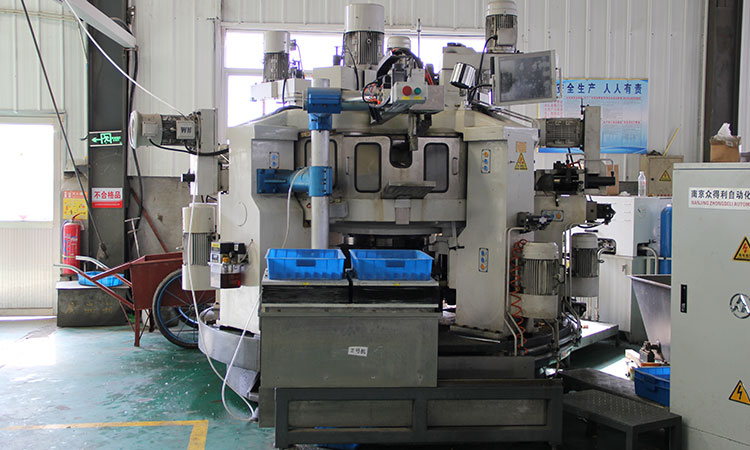
With more than 60 CNC machines and multiple automated lines, Chunhe ensures that every valve component is produced with high repeatability.
CNC machining for critical dimensions
Threads, sealing cones, spindle strokes, and key tolerances are precisely controlled.
Torque-controlled assembly
During assembly, components are tightened using calibrated torque, ensuring:
Smooth operation
Stable sealing pressure
Consistent product quality across batches
Clean internal finishing
All internal passages are cleaned, deburred, and oil-free to avoid combustion risks.
4. Every Valve Undergoes Full Performance Testing
A valve is not allowed to leave our factory unless it passes a complete set of performance inspections:
• Strength test
The valve body is tested under increased pressure to ensure stability and deformation resistance.
• Air-tightness test
Performed at both low and high pressure to guarantee zero visible leakage.
• Operation test
We simulate repeated opening and closing to verify long-term durability.
• Torque test
Ensures the valve opens and closes within a safe and comfortable operating force.
• LPG-compatibility test
Materials and seals are checked to ensure they remain stable during prolonged contact with LPG.
Every product has a traceable batch code and inspection record.
5. Three-Layer Quality Control System
Chunhe applies a multi-stage quality control process:
Incoming inspection
Process inspection at each machining stage
Final inspection before packaging
This ensures that problems are stopped long before products reach customers.
We maintain documentation for:
Material and component traceability
Defect statistics
Long-term reliability evaluation
Compliance with different regional requirements
This system allows us to keep safety at the center of production.
6. A Manufacturing Philosophy That Puts Safety First
Although an LPG valve is small and inexpensive, it carries the full responsibility for preventing leaks, fire hazards, and operational accidents.
Chunhe’s manufacturing principles are simple:
Never compromise sealing quality.
Never skip strength and leakage tests.
Never use materials with uncertain origins.
Never ship a product without full inspection.
Customers rely on valves because they prevent accidents—not because they are cheap.
Conclusion
A reliable LPG cylinder valve comes from:
The right materials
Structural design that prioritizes safety
Accurate machining
Strict testing
Zero-tolerance quality control
This is how Chunhe builds every valve—ensuring reliability, stability, and safety for industrial users around the world.