
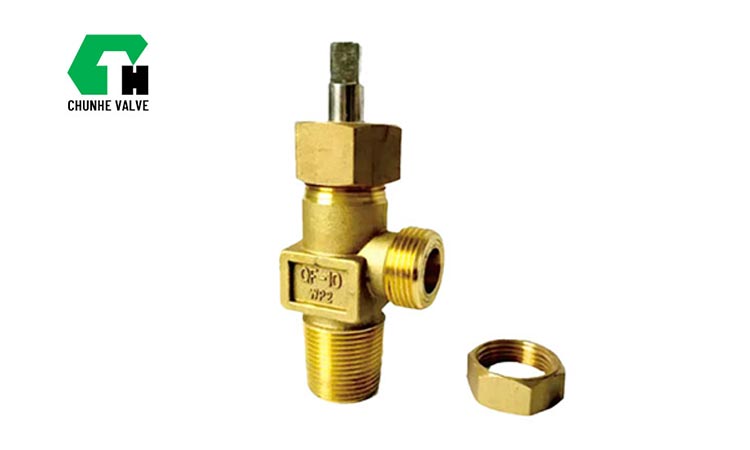
Chlorine cylinder valves are critical control components in industrial systems. They determine the safety and controllability of stored and transported chlorine gas. Because chlorine is highly corrosive and toxic, the selection, installation, and operation of the valve directly impact production safety. For this reason, companies usually place chlorine valves under strict hazardous chemical management.
1. Typical Application Scenarios
1. Water Treatment and Wastewater Plants
Chlorine is widely used for disinfection. Cylinder valves connect to chlorination equipment to precisely control dosing and ensure stable sterilization results. These environments require extremely reliable sealing performance since even minor leakage can affect the entire chlorination pipeline.
2. Chemical Synthesis and Chlorination Processes
PVC, pesticides, solvents, and various chlorinated hydrocarbons require chlorine as a feedstock. Cylinder valves handle opening/closing, temporary storage control, and pressure management. Many plants use automatic switching manifolds, so corrosion resistance and compatibility of the valves are essential for continuous operation.
3. Pulp and Paper Bleaching
Chlorine is added in controlled amounts during bleaching. Valve stability and smooth operation directly influence bleaching uniformity, which affects product quality.
4. Metallurgy and Surface Treatment
Chlorine is used for metal purification, oxide removal, and surface modification. Industrial settings often involve dust, large temperature variations, and harsh environments; therefore, valves must resist contamination and external particulates that could affect internal mechanisms.
5. Research Institutions and Laboratories
Small chlorine cylinders are commonly used for experiments. These scenarios demand more precise control and better leak detection, often equipped with gauges and dedicated detection devices for safety.
2. Safety Precautions for Using Chlorine Cylinder Valves
Because chlorine is hazardous, valve operations must strictly follow standard procedures. Key precautions include:
1. Operate gently; avoid excessive force
Over-tightening can damage the stem or packing, causing slow leaks. Proper technique is “light start, slow open, steady close.”
2. Keep oil, grease, and lubricants away
Chlorine reacts strongly with oils. Tools, gloves, and valves must remain oil-free to prevent dangerous reactions.
3. Always use a dedicated regulator or chlorination device
Chlorine exits the cylinder at high pressure. Only proper, compatible regulators should be installed. Improvised adapters or self-made fittings are forbidden.
4. Never disassemble components under pressure
Before replacing hoses or regulators, the valve must be fully closed and pressure reduced to zero. Pressurized disassembly is one of the main causes of chlorine accidents.
5. Avoid heat and direct sunlight
Heat causes chlorine to expand, increasing cylinder pressure. Long-term high-temperature exposure can deform valve components and degrade sealing materials.
6. Perform regular leak checks and inspections
Use soap water or leak detectors to inspect:
Valve stem packing
Outlet threads
Safety diaphragm (if present)
Regulator connection points
If bubbles or alarms appear, stop using the cylinder and move it to a ventilated area.
7. Ensure good ventilation and emergency safety equipment
Chlorine spreads quickly and irritates the respiratory system. Ventilation systems, exhaust fans, and emergency air handling equipment must be ready for immediate use.
8. Follow proper handling and storage requirements
Install the protective cap during transport
Store cylinders upright and secured
Avoid impacts or rolling
Keep away from combustible materials
Follow hazardous chemicals classification for segregation
3. Risk-Control Recommendations for Enterprises
1. Establish a “valve lifecycle log”
Record purchase dates, inspection dates, usage cycles, and maintenance history. Chlorine valves must never be used “until failure.”
2. Standardize operating procedures (SOP) and training
In water plants, chemical factories, and outsourced operations, operators must be trained on correct opening/closing procedures and leak-response workflows.
3. Deploy gas leak detection systems
Modern facilities install chlorine sensors that trigger exhaust systems and alarms to reduce response time during incidents.
4. Use quick-connect and visualized pipeline structures
This minimizes risks from low-quality fittings and simplifies inspection.
Conclusion
Though small in appearance, a chlorine cylinder valve is the safety core of the entire chlorine handling system. Whether in water treatment, chemical production, or laboratory operations, safe and compliant use of valves greatly reduces risk. Most chlorine-related accidents can be prevented through proper equipment selection, standardized operation, and continuous training.